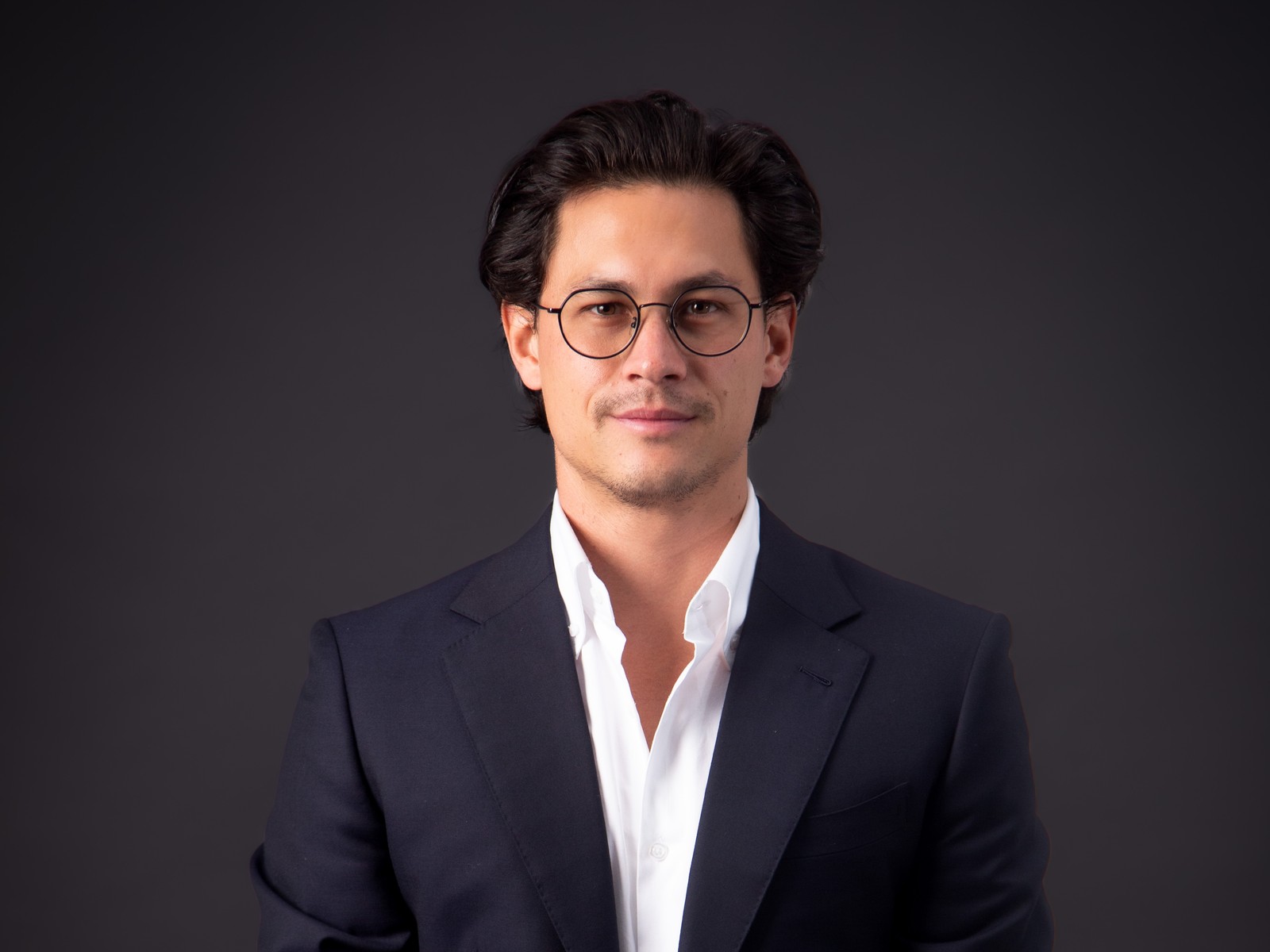

Ning Kong is Founding Partner of Lumen Partners, a boutique fund of funds based in Luxembourg specialising in European venture capital investment across technology and life sciences. The firm connects family offices from Asia and the Middle East with carefully selected European venture capital managers, combining institutional investment expertise with access to Europe’s innovation ecosystem.
Before founding Lumen she spent more than a decade at the European Investment Fund, where she worked on venture capital from market due diligence to risk and portfolio management. She has also been an angel investor and a founder, experiences that have shaped her understanding of venture capital from multiple perspectives. She hosts Behind the VC Desk, a podcast exploring the personal journeys, experiences, and decisions that shape investment professionals.
“I believe strong investment performance begins with the people behind the decisions. Integrity and discipline are fundamental to long-term success,” Kong says.
Money as a Token of Success
Kong was born in China and moved to the UK at 15. Choosing her A-levels, she weighed becoming a lawyer or a journalist. Then came a more practical thought that ultimately influenced her decision.
“I actually see money as a token of success, so I was just thinking, where should I be that can be really close to money? And that led me to finance,” she says.
She began in risk and credit in London, then joined the European Investment Fund. She started with venture capital market due diligence for the Benelux region, then moved to risk management and portfolio management. That gave her a comprehensive understanding of the venture capital industry, from an institutional LP perspective.
Understanding Investment from Both Sides of the Table
Along the way Kong wanted to do more than evaluate funds: she wanted to help businesses grow. She joined the Luxembourg Business Angel Network and found that talking to founders gave her energy. After a few years she felt she lacked one perspective.
“As an investor, I really don’t have the experience of being a founder myself,” she explains.
During the COVID pandemic, she established a supplement company, drawn by gaps she saw as a customer.
“The company fell massively, but from this, I learned a lot,” she recalls. Although the venture ultimately did not succeed commercially, the experience provided valuable lessons about entrepreneurship. “Being a founder taught me resilience and the operational challenges behind building a business.”
Having experienced the venture ecosystem as an institutional LP, angel investor, and entrepreneur, Kong now approaches fund manager selection with a more holistic understanding of how investment decisions translate into real business outcomes.
“Being a founder taught me resilience and the operational challenges behind building a business.”
After more than a decade at the EIF, she felt ready to apply her institutional investment experience in a more entrepreneurial environment.
She founded Lumen Partners with the ambition of connecting international private capital with Europe’s venture capital ecosystem, while bringing the discipline of institutional fund selection to family office investors.
A Beacon for Capital
The name Lumen means a beacon of light. Kong sees the firm as a partner for investors who want to explore Europe and need help navigating its venture ecosystem.
“Europe has significant strengths in enterprise software, industrial innovation and life sciences. Many of these sectors are supported by world-class research institutions, technical talent, and established industrial ecosystems,” she says.
For Kong, European venture capital offers international family offices opportunities to diversify their exposure to innovation beyond their domestic markets.
Lumen mixes funds across vintages, industries and stages, from pre-seed to Series B, so its investors do not depend on one manager to shine. It also manages co-investment opportunities, which Kong describes as matchmaking.
“We know the VC managers and their investment strategies, but equally importantly, we understand what our family office investors are looking for. Our role is to bring those two sides together in a thoughtful and disciplined way,” she adds.
What a Fund Manager Has to Show
For Kong, selecting a venture capital manager involves far more than examining historical investment performance. Her approach is built around four pillars: the managers themselves and their background, how the team works together, operations, and whether an exit plan exists when they come to raise capital. Above all, she wants authenticity.
“I really like a fund that really understands where their advantages are, and uses them,” she says. “The strongest managers understand exactly where their competitive advantage lies. They don’t try to be everything to everyone. They build their strategy around what they genuinely do better than others.”
For Kong, the strength of the proposition was not simply the investment thesis, but the alignment between the partners’ experience and what they were promising to deliver.
Behind the VC Desk
Kong launched the podcast Behind the VC Desk to share investors’ stories, which are rarely told compared with those of founders. Past experience shapes where a VC invests, and the stories help her judge managers.
“We hear so many stories about founders, but behind every investment decision is another human story. I am fascinated by what shapes an investor’s judgment, their upbringing, experiences, successes, failures, and the way they see the world. I’m really interested in the people. That’s the main reason I’m staying in this industry,” she says.
The show is also for people who want to enter the industry.
“Doesn’t matter your background. As long as you have a unique selling point, you can use your uniqueness as an entry point to VC,” she adds.
Her first guest was a prominent female figure in British venture capital who, because of her strong VC performance, is often called the Queen of British VC. She’s known for her strong views on integrity and the importance of choosing the right people to work with. Kong shares that philosophy. “I believe good ethics are fundamental. You can have an impressive track record or a compelling investment strategy, but if the values and integrity are not there, it is very difficult to build a sustainable long-term partnership.”
When Exits Stall
Returning capital to LPs has become harder, she explains, especially in Asia, where startup exits depended on IPOs and the IPO market has struggled. In Europe, most exits are trade sales, not listings, so the picture is slightly better. Still, the whole industry organized itself around an IPO boom and neglected other routes.
“We see it start to adapt, to find other ways for the liquidity,” she notes.
Secondaries are booming, and exit strategy is now one of her main points in due diligence. “Exit strategy should not be an afterthought. It should be part of a fund manager’s thinking from the very beginning, even though the timing and form of an eventual exit can never be guaranteed.” Managers must show they have thought about it and begun building relationships with other funds.
Her advice to family offices is to treat private markets as one part of a portfolio and to expect patient, locked-up capital. Because tech companies now stay private longer, she recommends committing for ten years or more.
“Exit strategy should not be an afterthought.”
Peaches and Coconuts
Venture capital is an American invention, Kong says, and Europe came to it later. Drawing on her experience across European and international markets, Kong offers a playful analogy about differences in business culture.
“People in the US are like peaches: very soft outside, but very hard inside. Europe is like a coconut: very hard outside, but very soft inside. In my experience, Americans can be very open and approachable initially, but building a deeper relationship takes time. Europeans may appear more reserved at first, but once trust is established, those relationships can become exceptionally strong,” she says.
For Kong, the analogy highlights the importance of understanding local business cultures and building long-term relationships, particularly in an industry where access, trust and reputation matter enormously.
Europe has long lacked growth stage VCs, and more are now appearing, a sign to Kong that the market is slowly maturing, though there is still a long way to go. Defense and space have taken off over the past three to five years as institutional LPs move in.
A Legacy That Keeps Growing
Looking ahead, Kong expects venture capital to widen its toolkit. Investors have become aware that illiquidity can keep people from investing in VC at all, so managers are exploring other options, such as private credit, secondaries and evergreen platforms open to smaller investors.
She also sees the industry changing in who runs it. More women are becoming fund managers and mixed-gender investment partnerships are becoming more visible. Networks and initiatives such as European Women in VC and Unlock VC have helped create opportunities for greater representation and collaboration. Kong believes diversity of experience can also broaden the types of investment opportunities that receive attention.
She points to growing interest in women’s health, including female-specific healthcare and menopause-related innovation, as examples of areas that have historically been underserved.
For Lumen, her ambition is to be the first name people think of when they want to enter European venture capital. Her own idea of success has moved on from the money she once saw as its token.
“I discovered who I really am, when I was younger, I associated success with money. Over time, I came to realise that wealth is not simply about what we accumulate, but what we make possible for others. The legacy I want to leave is something that continues to grow because of me,” she says.
“The legacy I want to leave is something that continues to grow because of me.”