
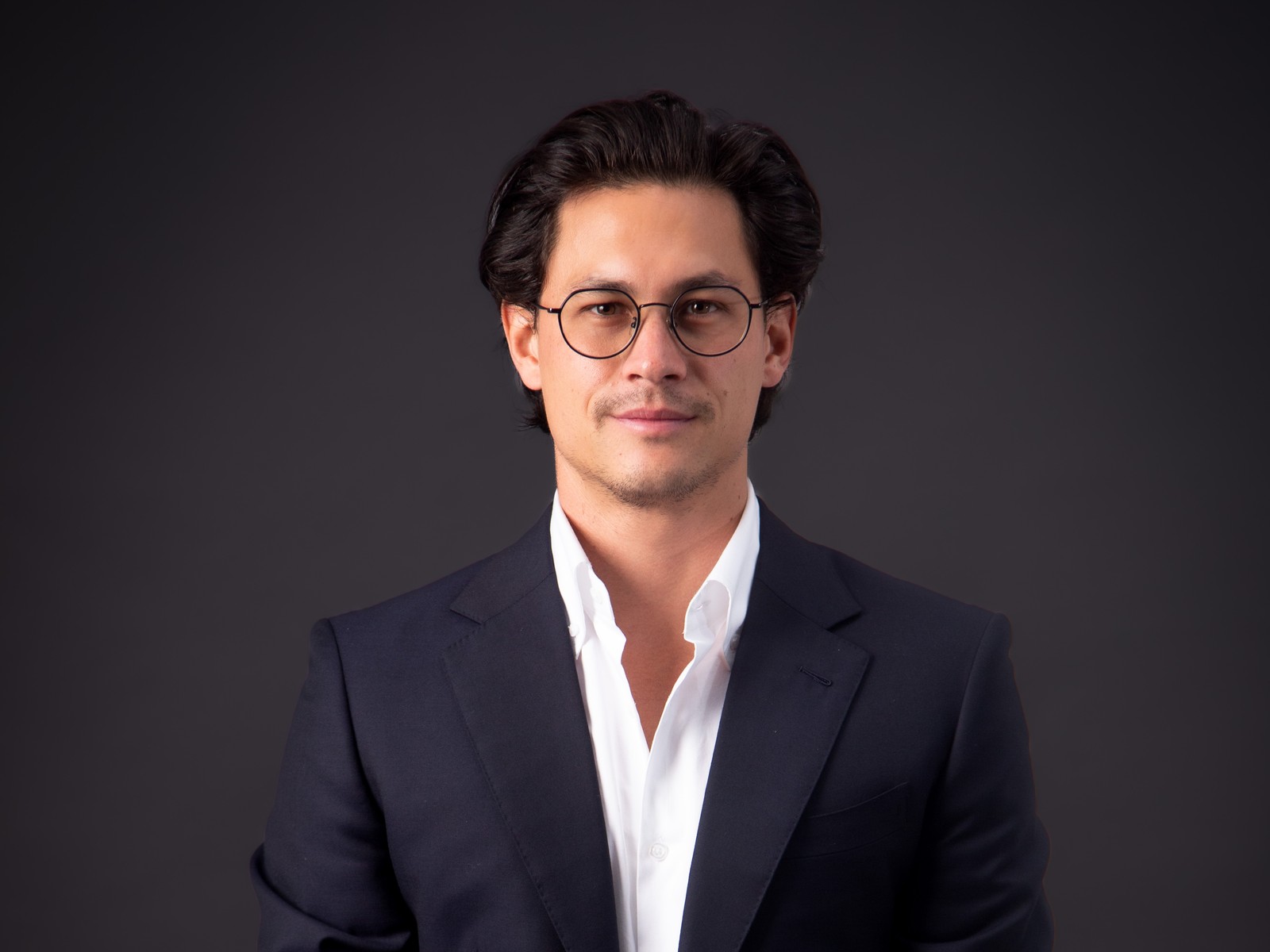
Anthony Rollet is the Founder and CEO of Kane Capital Partners, a boutique real estate investment firm based in Bali. Launched in 2024, the firm buys distressed property in Indonesia and rebuilds them into institutional-grade, ESG-certified assets.
Before moving to Southeast Asia, Rollet built his career in institutional real estate at Colony Capital, Valor Real Estate Partners and The Valesco Group. The lessons he took from those years have helped to shape everything Kane Capital does.
“A strong thesis is more important than the building. Prime or not prime doesn’t matter. If the math makes sense, people need that,” Rollet says.
The Thesis Before the Building
Rollet is French and grew up in Tahiti, the son of a hotel concierge. He was never drawn to running hotels, but he was fascinated by who owned them. He studied math and economics, convinced it would open the door to private equity real estate. Becoming fluent in English was tough for a French speaker, so he made it a priority for his first internships in New York and Los Angeles, and he has stayed in real estate ever since.
At Colony Capital he sat on the special situations desk, which exposed him to debt, restructuring, financing and equity at once.
“You’re seeing every single angle that you can look at as a real estate investor or as a real estate lender,” he says.
At Valor, where he worked on deals that included 24 logistics and industrial assets worth over £1 billion, the focus moved to value-add and development, the riskier end of the spectrum. At Valesco he helped secure approval for the €460 million acquisition of Accor’s Paris headquarters.
Those years taught him to look beyond blanket rules. During COVID, many investment committees declared that they would not touch the office sector. Rollet watched what happened next.
“If you were buying distressed value-add buildings and refurbishing them to the highest standard, rents kept growing and you had new tenants,” he says.
From London to Bali in Three Months
Part of Rollet’s family is Asian, and he had long felt at home in the region. He first visited Bali in 2019 to see relatives, but he was not yet ready to start something of his own. In December 2022 he went back and spent a week studying the market instead of resting.
“Going back to London, it took me a month to make my decision, and after three months I was already out,” he recalls. “I’m someone who jumps when I see an opportunity.”
In Indonesia he saw a growing middle class, favorable demographics and a government working to attract foreign direct investment. The rules had been unclear for years, but they were becoming clearer.
“People like me with institutions are way more comfortable coming today than they were ten years ago,” he says.
Buying What Others Left Half Built
Kane Capital’s niche is in acquiring and developing distressed assets. For decades, foreign investors in Indonesia found it hard to get local financing, so developers leaned on off-plan sales. Add weak marketing and COVID, and many projects fell through.
“Over the past 20 years, a lot of projects have gone bust,” Rollet says.
Kane Capital finds those projects through local relationships rather than public listings. The firm works with authorities in Bali and Jakarta, and with the banks and auction system that handle troubled assets. Its pipeline is almost entirely off-market. The authorities have an incentive to help.
While many Indonesian developers chase ultra-prime projects and end up in bidding wars, Kane Capital stays out of them.
“We’re staying under the radar, so our investment is protected by different layers,” he says.
The rebuilding follows what Rollet calls New-Build Heritage under institutional-grade ESG certifications, which follows “the highest international standard, not just the standard in place in the country right now.”
Kane Capital uses wood wherever it can, as the region traditionally did, and pairs it with modern engineering: water recycling, solar power and electrical systems built to the highest standard.
“We’re staying under the radar, so our investment is protected by different layers.”
“Historically, these countries were built in wood. Ironically, if there is an earthquake, the building they built a thousand years ago is more solid than a new build that isn’t of really good quality,” he says.
Making a New Market Legible
Kane Capital’s investors range from high-net-worth individuals to family offices, drawn from both the West and Southeast Asia. Rollet set out to bring Western capital in, and he wants to keep that focus, so that Indonesia is seen as a source of diversification. He points out that structures in Hong Kong, Singapore and Dubai make that easy to do securely.
The hardest conversation, he says, is about ownership.
“On an hour call, we spend 20 minutes on the business plan. If the math makes sense, we spend the next 40 minutes on the ownership structure and how we sell it. A very important point for an investor is: how do I exit?” he says.
Land title was once the main obstacle. Regulation has largely fixed it, though perceptions lag behind.
“It’s now become more structured,” he says.
He sees the investor base shifting. Asian investors were historically comfortable with liquid investments, and now they are learning to hold illiquid ones. Europe offers less appetite and deal flow, while Middle Eastern capital is looking at Asia.
“A very important point for an investor is: how do I exit?”
The Island Beyond the South
The most common misconception Rollet hears is that Bali is overbuilt.
“Is the market overcrowded? Is it overdeveloped? Absolutely not. If anyone looks at the map of Bali, the south is developed, not Bali,” he says.
The island welcomes 15 to 16 million visitors a year, more than its infrastructure was designed for, and the government is now building new roads and planning a second airport in the north. Officials are also discussing a special economic zone on the model of Dubai and Kuala Lumpur. The island’s popular areas have moved in waves: Canggu boomed over the last eight years, Uluwatu has led for the last four, and he expects Ubud to be next.
“When we see what happened with Dubai in 20 years, we see that it’s possible,” he says.
If the government gets the zone right, he believes, Bali becomes a destination for institutions as well as for people drawn by lifestyle.
Deal by Deal
For the next three to five years, Rollet intends Kane Capital to stay focused on Indonesia. He wants the firm to be known as an expert in one market before it looks at others, and he keeps the mandate flexible, deal by deal.
He is in discussions on a possible investment in Java, and he expects a special economic zone would create demand for offices, light industrial and last-mile logistics. Data centers and other infrastructure need institutional backing, he says, which is where Kane Capital can act as a bridge between the country and global expertise.
“Wherever you look in Indonesia, there is an opportunity,” he says.
“Wherever you look in Indonesia, there is an opportunity.”