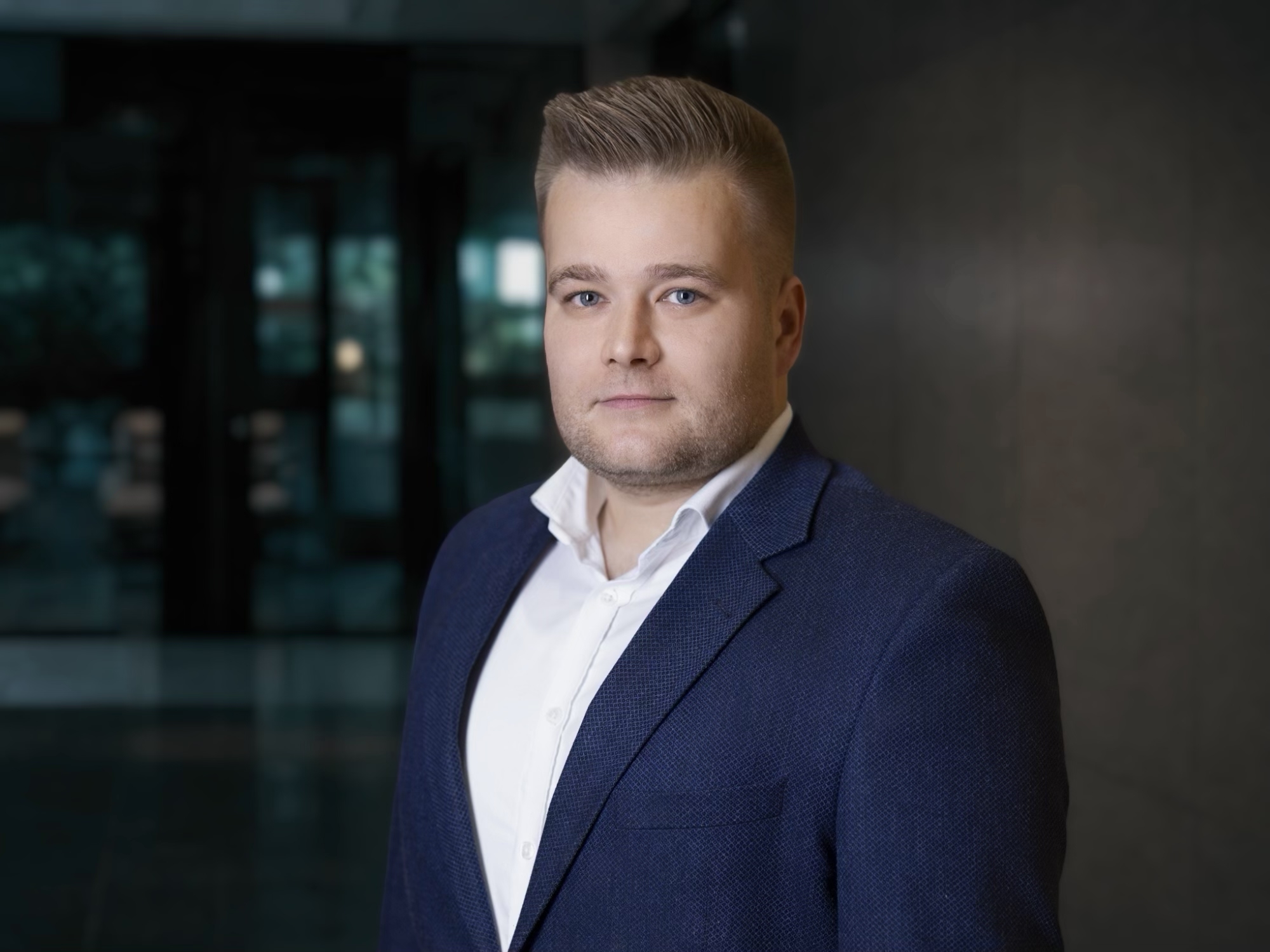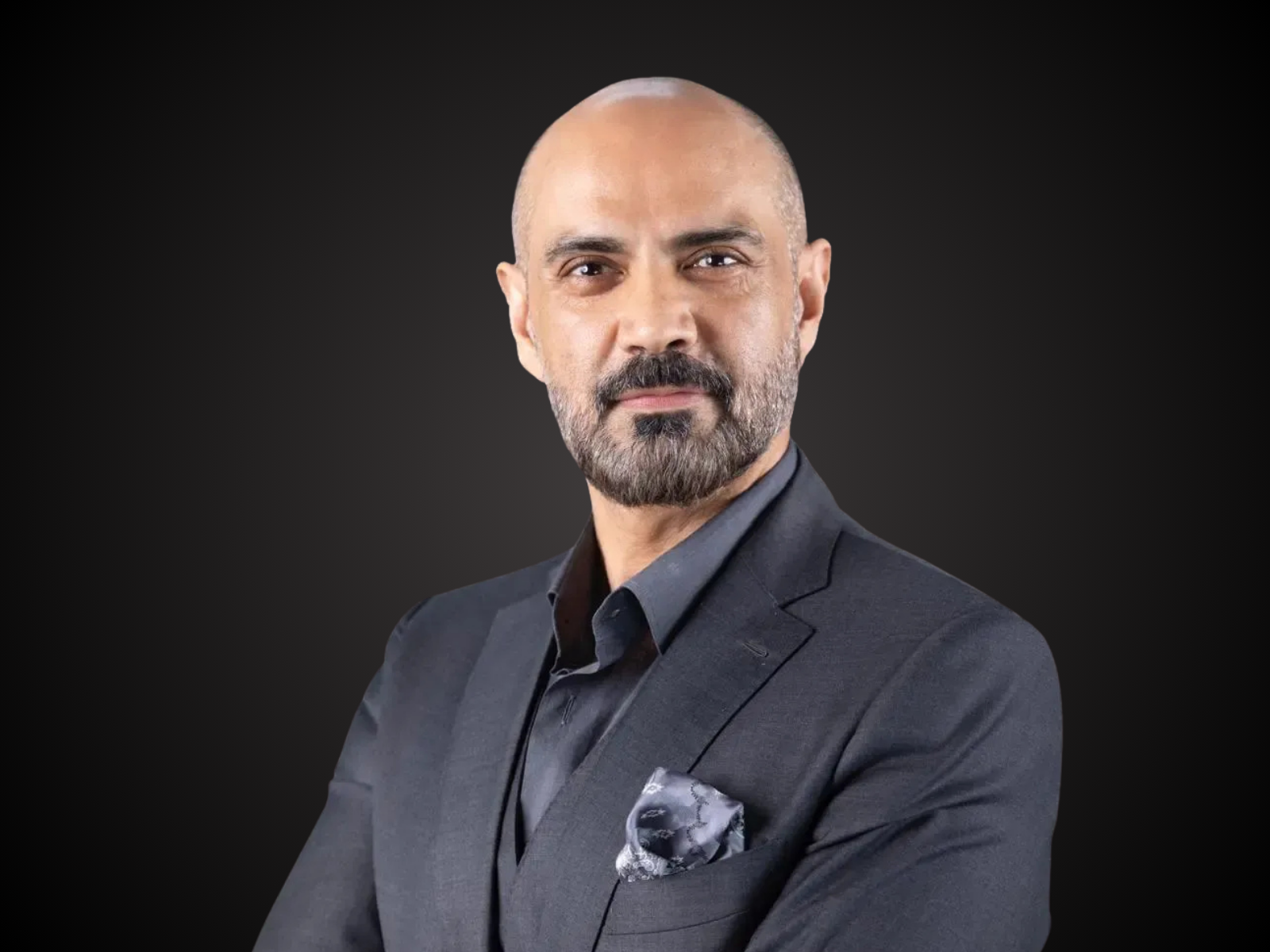

Michael Kenner is the co-founder of FazWaz, one of Southeast Asia’s largest residential property platforms. Founded in Phuket in 2015, the company scaled from a local search site into a multi-market operation with thousands of agents on the ground.
In 2023, FazWaz was acquired by Lifull. By early 2025, following a strategic restructuring, Michael Kenner assumed the role of Managing Director of Lifull’s international business, Lifull Connect, leading its global portfolio of property platforms.
Kenner’s experience spans multiple market cycles, regulatory regimes, and operating environments across Southeast Asia. What distinguishes his trajectory is not scale alone, but the operational depth required to build and sustain a real estate business in markets where trust, regulation, and execution matter far more than narrative.
Where It Started
Michael Kenner, originally from the UK, did not arrive in Thailand with a defined plan to build a company. He came because he wanted to live there. Entrepreneurship followed out of circumstance rather than ambition, and venture capital was not part of the early thinking.
“The honest answer is that we kind of fell into it,” he said. “We’d turned up here and we had not much to do.”
What became clear over time was that the opportunity in Thailand was larger than it would have been in London. Competition was weaker, infrastructure was newer, and there was more room to grow. Rather than building from scratch, Kenner and his co-founder adapted proven models from more established markets to local conditions.
A Failed First Attempt
Before residential real estate, Kenner and his co-founder worked on a vacation rental business called Live Phuket. Within months, Airbnb entered the market and absorbed demand at scale.
The lesson was immediate and formative: if a global platform could dismantle a business that quickly, the next venture needed to be rooted in local execution, regulatory complexity, and human trust — not just digital reach.
Residential property met those conditions. It was slower, more complex, and far less conducive to external platforms displacing incumbents. It was more defensible.
A Market Still Forming
When FazWaz started, much of Thailand’s property market was offline. Newspapers and classifieds were still common, listings were often vague, and key information such as exact locations or developer identities was obscured. Buyers often navigated opacity rather than clarity.
Kenner and his team saw this as a trust gap more than a technology gap. Making core data transparent — including locations and developer names — became an early and enduring principle.
“We were the first in Thailand to do that consistently,” he said. “Everything was transparent.”
That approach eventually became easier for others to copy. Execution did not.
The Operating Layer
Kenner is careful with the term “proptech.” In practice, he sees FazWaz as a people-driven business supported by technology, rather than the other way around. Property remains a trust-based purchase, and buyers still rely on human judgment rather than platforms alone.
“People still buy real estate from people,” he said. “We’re not at the point where platforms replace that.”
As the company scaled, the primary constraint became talent. Hiring, training, and managing large teams across different markets proved more demanding than developing software. In Thailand alone, FazWaz employs thousands of agents, and continued expansion now depends on leadership capable of sustaining execution across multiple, highly complex markets.
Across Markets
Looking back over more than a decade in Southeast Asia, Kenner describes change as cumulative rather than dramatic. Digitisation expanded access to information and improved baseline confidence among buyers. Property supply broadened across the region, with greater diversity and professionalism in new developments. Regulatory clarity also improved incrementally, making participation more predictable — even if not simple.
At the same time, expansion made one lesson unavoidable: Southeast Asia does not behave as a single market. Thailand, Indonesia, Vietnam, and the Philippines differ sharply in language, regulation, and operating culture — and even within countries, local dynamics vary. Phuket is not Bangkok; Jakarta is not Bali.
In that context, competition is shaped less by speed or capital than by execution. Kenner argues that funding often prioritises narrative over the realities of operating on the ground, particularly when investors lack local familiarity. If a serious competitor were to emerge, he believes it would be a strong local company built for its domestic market, with cultural fluency — not a deep-pocketed foreign entrant.
What Success Means Now
Kenner is unusually candid about how his motivation has changed over time. In his late twenties, success was defined simply.
“Before, honestly, we were trying to solve one problem: how do we get more money in our pockets,” he said. “That was the truth. We wanted to be rich, so we needed to build a big company.”
With time, that definition shifted. Not because money stopped mattering, but because it stopped being sufficient. Coming from investment banking, he had already seen what conventional success looked like in practice — high pay paired with dissatisfaction, strained relationships, and little enjoyment of the journey itself. He was deliberate about not recreating that outcome in his own life.
Today, success is measured less by external markers and more by experience. What matters is whether the work remains engaging, whether the people involved enjoy building together, and whether the journey itself feels sustainable over time.
For Kenner, success today is less about arrival than momentum. As he puts it, “that’s what success is to us — to challenge and do things.”
Building a Company People Want to Belong To
That shift in perspective has directly shaped how Kenner thinks about leadership and company culture.
“I want people to say, ‘That’s Michael — he’s someone worth working for,’” Kenner said. “That’s where I get gratification.”
When asked how he thinks employees would describe him, he points first to fairness and trust.
“I think they’ll always say he was fair, and he kept his word,” he said. “My reputation amongst my staff is really important to me.”
That emphasis on fairness extends into how he thinks about growth inside the organisation. With a workforce that supports thousands of people and their families, Kenner sees progress as a collective responsibility rather than an individual pursuit.
“Grow together. Don’t grow by yourself. Grow together,” he said. “Share your lessons, share your stories, help people grow.”
Playing the Long Game
Kenner is unusually direct about both his strengths and his limitations as a founder. He does not present himself as a well-rounded executive, nor does he believe that trying to be one is the right goal.
“My strongest ability is that I can persuade,” he said. “I’m good at persuading or convincing people.”
Kenner has learned to focus on what he does best: vision, conviction, and the ability to bring people along a journey before its outcome is clear.
“What I’ve done is home in on my superpowers,” he said. “Work out your superpowers and become excellent at your superpower.”
Another piece of advice he would give to other founders is that persistence matters more than polish. FazWaz did not begin with a clear plan or institutional backing. The early years were defined by experimentation, missteps, and staying engaged long enough to learn.
“We were wild founders, wild startup, no clear direction — just pure persistence,” he said. “We stayed in the game.”
“Work out your superpowers and become excellent at your superpower.”
Learning to Pause
Kenner is aware that his motivations are often misunderstood by people who only see the surface of the business.
“People don’t realize that I really care about the people,” he said. “And when I hear, ‘You’ve done so well,’ I’m always saying — we have done so well. There’s a whole load of us that worked to achieve this.”
The moments that stay with him are not meetings with investors or milestones on paper, but shared experiences with the team. One of the clearest memories came before the pandemic, when the company brought everyone together for several days.
“You look around and you’re like, ‘Oh — we did it, guys,’” he said. “Those are the moments we need more of.”
As the company has grown, that awareness has sharpened his sense of what matters beyond work. Outside the business, his priorities are uncomplicated: family, close relationships, and health.
“All this is a waste of time unless you’ve got great family, great friends, great health,” he said.
It is a perspective he admits took time to internalise. People chase money believing it defines success. Only later do they realise what success really means.