
Jason Ho: Building Asia’s Global Technology Stage
Updated: Mar 24
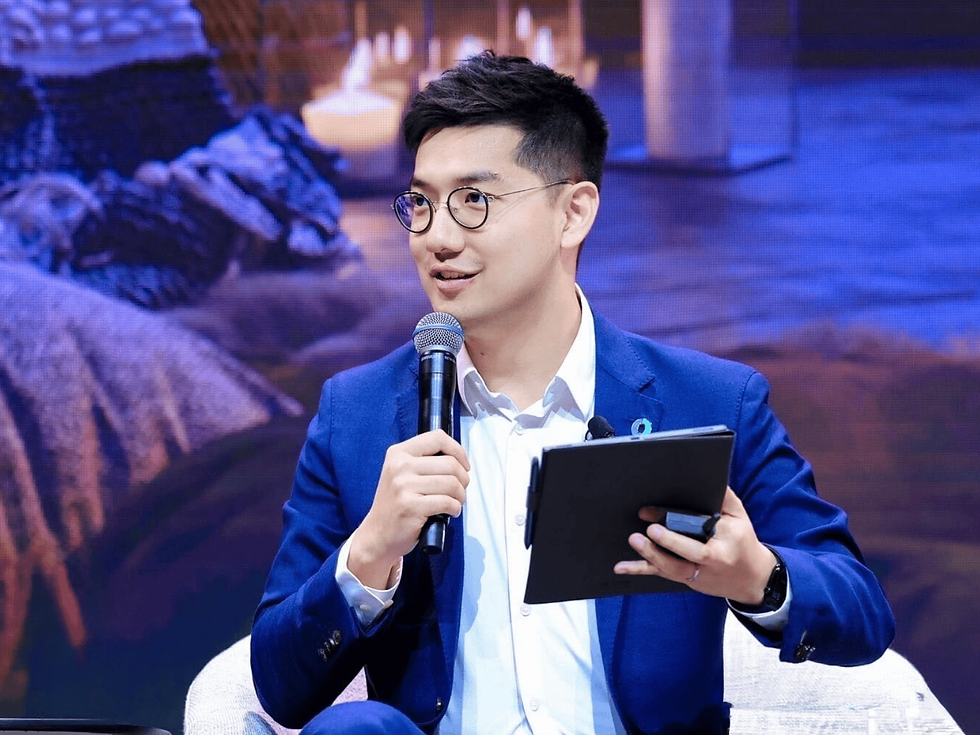
Jason Ho is the co-founder of BEYOND Expo, a technology event that brings together Asia’s innovation ecosystems with global capital, companies, and markets.
Conceived as a neutral convening ground for a fragmented region, BEYOND has grown into one of Asia’s largest cross-regional technology events — spanning China, Southeast Asia, Japan, Korea, India and the Middle East.
“We saw huge technology platforms in the West — CES, Web Summit, VivaTech,” Ho said. “But there wasn’t one unified platform for Asia. This region deserved a stage to show the world what’s happening here.”
Early Entry into Innovation
Ho’s path into the technology ecosystem did not follow a conventional trajectory. After university, he joined his family’s real estate development business in mainland China — an experience that quickly clarified where his interests truly lay.
“I realized it wasn’t something I was passionate about,” he said. “I’m driven by learning — especially around technology and the people building it.”
His entry into the startup world emerged organically. An unused property in Hangzhou became the foundation for his first accelerator, Forte Incubator, marking the beginning of his work in innovation.
“It was empty space no one was using,” he said. “I saw an opportunity to build something aligned with my interests — and that was technology.”
Designing a Pan-Asian Platform
Across Asian markets, Ho has come to see the region’s innovation landscape as fragmented, with each location serving a different function.
Mainland China drives technological development, while Hong Kong and Singapore serve as financial hubs and gateways to global markets, competing for that position.
Macau, by contrast, provides a neutral environment to bring different regions together. This neutrality, combined with Macau’s positioning as an entertainment hub comparable to Las Vegas, informed BEYOND’s location strategy.
In Ho’s view, successful platforms combine business with experience, meeting both professional objectives and the expectations people have when they travel.
By leveraging Macau’s appeal as a destination, BEYOND attracts an international audience, creating an entry point through which attendees are introduced to Asia’s innovation ecosystems.
“Our ultimate goal is to create a platform for Asia that allows the world to see what’s happening here,” he said.
Bridging East and West
At its core, BEYOND is designed as a bidirectional exchange: global companies entering Asian markets and Asian firms expanding internationally.
“Asian companies want to go global, and global companies want to enter Asia,” Ho said.
In the past, international expansion was largely driven by Western technology companies, while many Asian firms remained focused on domestic or regional markets. Today, that dynamic is changing. A new generation of Asian companies is being built with global ambition from the start.
Expansion across regions depends on regulation, market access, and geopolitical conditions.
In this context, platforms like BEYOND bring together founders, investors, and operators. The focus is not only on visibility, but on enabling concrete business partnerships.
“For people to keep coming back to an event, there has to be real business happening,” he said. “Otherwise, it’s not sustainable.”
Asia’s Next Decade of Innovation
Ho sees Asia entering a period of accelerating technological influence, driven by a combination of scale, infrastructure, and speed.
“I think the next ten years will be in Asia,” he said. “The opportunities are here, the supply chain is here, and many business scenarios are driven by population scale.”
Population scale plays a dual role — creating large consumer markets and generating the data needed to train and deploy AI systems.
At the same time, Asia’s manufacturing base and integrated supply chains enable faster development and commercialization of new technologies, particularly in hardware.
Asia’s later technological development has also enabled faster adoption cycles, as newer systems can be implemented without the constraints of legacy infrastructure.
For Ho, this momentum is structural.
“This region deserves a platform,” he said. “From now to the next ten years, Asia is a market people shouldn’t miss.”
China’s Globalizing Entrepreneurs
A generational shift is underway in Chinese entrepreneurship — from supply chain manufacturing toward building globally recognized brands.
“Ten or fifteen years ago China focused mainly on supply chain manufacturing,” he said. “Now the younger generation wants to build its own brands and create global companies.”
Companies such as DJI and Insta360 illustrate this transition from OEM production to global product identity, as founders move beyond manufacturing for others to develop their own products and positioning.
This shift is reinforced by the dynamics of the domestic market.
“The market is huge, but also extremely competitive internally,” Ho said.
Building a Unified Asian Identity
The greatest challenge in building BEYOND, Ho says, has been convincing Asia itself of the need for a shared platform. Fragmented across geopolitics, language, and culture, the region does not naturally operate as a single ecosystem.
Now in its sixth edition, the event is approaching a point where it becomes part of the global technology calendar, alongside major industry events.
“When people start to put it on their calendar — CES in January, MWC in March, BEYOND in May — then we are the regional event,” he said.
For Ho, building a regional platform is only part of a broader ambition: strengthening the confidence of Asian founders to build globally recognized companies.
“What we hope to see is founders believing they can build global companies — not just U.S. entrepreneurs, but Asian entrepreneurs as well,” he said.