
James Ong: Building Strategy for a Multi-Generational Family Group
Updated: May 20
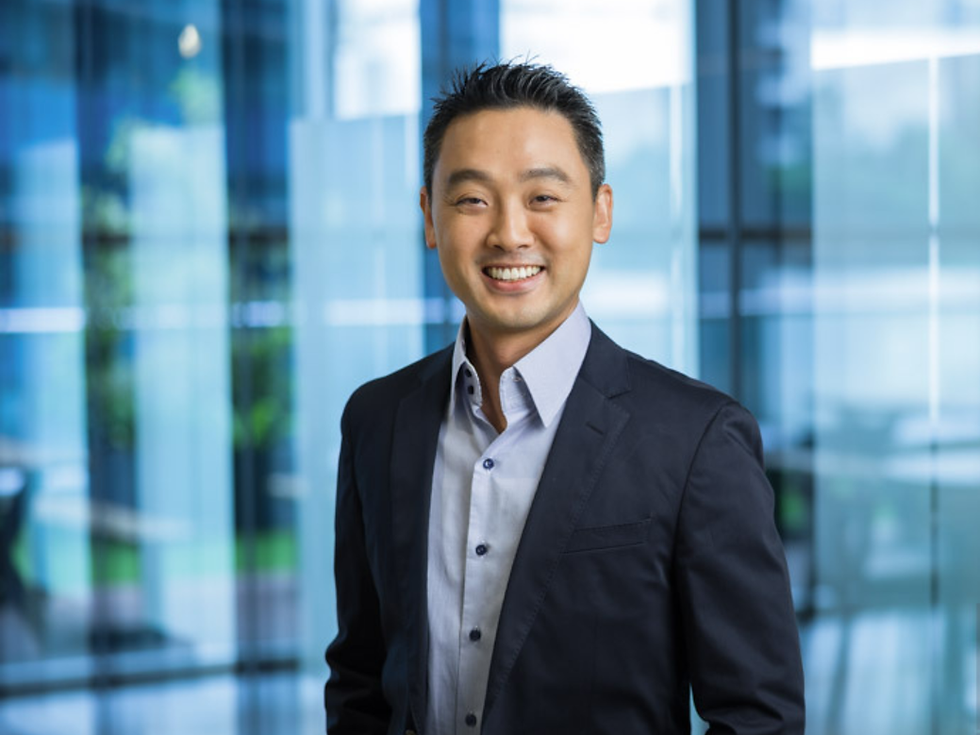
James Ong is Chief Strategy Officer at TPC (Tsao Pao Chee), a Singapore-based multi-generational family platform with roots in shipping, ports, and industrial operations.
Under the stewardship of chairman Chavalit Frederick Tsao, a vocal advocate of the well-being economy, the group has been expanding beyond its traditional base. Over the past decade, it has reallocated capital across energy, real assets, and emerging sectors shaped by structural change in Asia.
Ong, who oversees the group's strategy, M&A, and investments, explains:
"All our investments need to create value not just economically, but for people or for the planet."
From Banking to Family Capital
Ong's career spans private banking, merchant banking, and corporate venture capital across Asia—but the path was never linear.
He started in accounting at DBS, moved into private banking at OCBC, and quickly realized the sales-driven culture wasn't for him.
"I'm really not a salesman. I don't like being forced to sell things which I don't have high conviction in," Ong says.
At 27, he left banking to help a Swiss merchant banker open an Asia office. Then his father passed away, and Ong found himself involved in close to ten family businesses—from afood distribution company to a childcare chain and a traditional Chinese medicine operation. It took five years to divest them all, during which he also completed his MBA at the University of Chicago.
He later served as Chief Investment Officer at YCH Group, where he launched a corporate venture arm and managed their industrial real estate portfolio across Asia.
In June 2020, at the onset of COVID, he joined TPC (Tsao Pao Chee).
One Outcome, Multiple Paths
Institutional finance and family capital operate very differently, and that shapes how decisions are made.
"In an institution, you're essentially on one highway. The direction is set, and the entire organization moves along that path. In a family business, there isn't just one route—there are multiple. You have to figure out which path to take, but the end goal itself never changes," Ong says.
At TPC (Tsao Pao Chee), the group has defined six investment pillars—spanning well-being, food system, energy transition, human construct, climate and nature, and circular economy.
Recent investments across these pillars include renewable energy infrastructure, EV battery technology in China, and growing positions across the food systems value chain and traditional Chinese medicine across Southeast Asia.
AI in the Investment Committee
The group is not only redesigning its investment strategy, but also its investment process.
Over the past two years, TPC (Tsao Pao Chee) has built an internal agentic AI system that supports everything from deal sourcing and screening to documentation and portfolio tracking.
On top of this, the group has introduced simulated perspectives into its decision-making.
"We are in the midst of creatingan AI investment committee member. It can switch between different personas—an entrepreneur, a governance-focused investor, even a visionary," Ong says.
The group has gone a step further—modelling its own chairman as an AI persona.
As more of the analytical work is automated, the role of the team is shifting.
"The role of analysts will change. We're already telling our team to be more business development–minded, because financial modeling will be handled by the system," Ong says.
How Capital Is Deployed
At TPC (Tsao Pao Chee), investment decisions follow a clear set of filters. Opportunities must align with the group's investment pillars and focus on markets where it has operational familiarity—currently Singapore, Malaysia, Thailand, Indonesia, China, and Japan.
Beyond this, two factors carry more weight: the people behind the business and its ability to grow.
Founder quality is key. Ong says the group has killed deals late in the process based solely on concerns about the people running the business.
Unlike financial investors, the group does not approach investments with a fixed exit timeline.
"Financial investors typically come in and look to exit in three to five years. For us, we don't mind exiting if it's a minority investment, but where we really see the upside is in building synergies with our core businesses," Ong says.
This changes how the group evaluates opportunities.
"The most crucial part is how we can grow the business beyond where it is right now, and how we can help the founders get there," Ong says.
Where Capital Is Moving
Across sectors, energy and data are emerging as two of the defining themes. Ong describes them not as industries, but as underlying currencies.
"The new currency isn't physical anymore—not gold, not cash. It's energy and data. These are the two things that will define where capital flows," Ong says.
Geographically, Singapore continues to strengthen its position as a regional hub for family offices and long-term capital. When Ong entered the private banking industry around 2000, Singapore was already being positioned as a future financial hub for Asia.
"Singapore has always been seen as the Switzerland of Asia," Ong says.
The appeal lies in a combination of political stability, regulatory transparency, and a well-developed ecosystem supporting wealth management.
"When new regulations are introduced, there's usually a consultation process first. So people can prepare, rather than having to react after the rules are already in place," Ong says.
The Well-Being Economy
TPC (Tsao Pao Chee) is repositioning itself from an industrial operator into what Ong describes as a platform for the "well-being economy."
"Everything starts off with yourself first. You need to center yourself and center your life before you can make any change outside of that. How you change yourself can then change your family, and how you change your family can then impact your ecosystem around you," Ong says.
Internally, this is supported through structured programs that all employees go through. The Mindful Living Program is a seven-night immersion focused on self-discovery and emotional regulation. A deeper follow-up, the Mindful Emotions Program, runs over nine months—exploring how personal transformation can extend to family, colleagues, and the wider ecosystem.
In 2024, the group co-founded WEGA — the Well-being and EESG Alliance — together with NUS Business School, with a mission to advance sustainable, well-being economies across Asia, where profit and purpose intertwine.
Externally, this philosophy shapes how investments are evaluated. The group invests only in businesses that can generate returns while contributing positively to people or the planet—what TPC describes as its mandate to serve well-being and create wealth at the same time.
The Next Chapter
Ong's career has been defined by reinvention—each chapter requiring a different skill set and a willingness to step into unfamiliar territory.
Recently, TPC's chairman Chavalit Frederick Tsao challenged him to think beyond his current role—to step out and pursue something he had always wanted to build for himself. The result is a new partnership within the broader TPC ecosystem, one that Ong is still shaping.
For Ong, the lesson is about mindset.
"If you recognise that things are always changing, then you can learn to change along with whatever’s happening. It’s about finding passion in what you do, while understanding that nothing is ever constant,” Ong says.